The distinction between an Individual Taxpayer Identification Number (ITIN) and a Social Security Number (SSN) is crucial for anyone navigating the U.S. tax system. Both serve as identification numbers, but they have different purposes and applications.
In this article, we will explore the difference between ITIN and SSN, their uses, application processes, and the benefits associated with each. By understanding these differences, individuals can make informed decisions regarding their tax obligations and identification needs.
What Is The Difference Between ITIN And SSN?
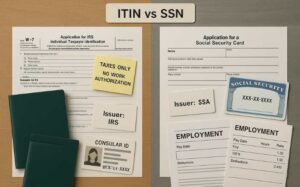
The difference between ITIN and SSN primarily lies in their purpose and who can obtain them. An SSN is issued by the Social Security Administration (SSA) to U.S. citizens and eligible non-citizens, primarily for work and tax reporting purposes.
In contrast, the ITIN is issued by the Internal Revenue Service (IRS) specifically for individuals who are required to have a U.S. taxpayer identification number but do not qualify for an SSN. This includes nonresident aliens and foreign nationals.
While both numbers serve to identify individuals for tax purposes, only the SSN allows access to Social Security benefits and employment authorization. Those with an ITIN cannot work legally in the U.S. or access such benefits.
Why Do I Need A Social Security Number (SSN)?
An SSN is essential for several reasons. First, it is a requirement for anyone wishing to work in the United States. Employers need it to report earnings and pay taxes. Without an SSN, individuals may find it challenging to secure employment legally.
Additionally, an SSN is necessary for accessing various government services and benefits, such as Social Security benefits and healthcare. It is also often required for opening bank accounts, applying for loans, and other financial activities.
Moreover, having an SSN helps in building a credit history, which is crucial for future financial endeavors. Therefore, obtaining a Social Security Number is vital for anyone planning to reside and work in the U.S.
How Is An ITIN Used For Tax Purposes?
An ITIN is primarily used for tax reporting purposes for individuals who do not qualify for an SSN. It allows these individuals to comply with U.S. tax laws by filing federal and state tax returns. This is especially important for non-resident aliens who earn income in the U.S.
When using an ITIN, individuals can report their income to the IRS and pay taxes on it. However, it does not provide any authorization to work in the U.S. or serve as proof of immigration status.
Additionally, individuals with an ITIN may not be eligible for certain tax credits available to SSN holders, such as the Earned Income Tax Credit (EITC). Thus, understanding how to use an ITIN effectively is crucial for proper tax compliance.
Can I Have Both An ITIN And An SSN?
It is important to note that individuals are not allowed to have both an ITIN and an SSN simultaneously. If a person who initially obtained an ITIN later becomes eligible for an SSN, they must discontinue the use of the ITIN and use the SSN for all tax purposes.
Those who have transitioned from an ITIN to an SSN should ensure that they notify the IRS of this change. This process involves updating their tax records to reflect their new SSN and discontinuing any further use of the ITIN.
Maintaining the accuracy of one’s tax identification information is essential for avoiding issues with the IRS and ensuring compliance with U.S. tax laws.
What Is The Application Process For An ITIN?
The application process for obtaining an ITIN is relatively straightforward. Individuals must complete the IRS Form W-7, which serves as the application for an Individual Taxpayer Identification Number. This form requires various personal details and documentation.
Applicants must provide proof of their foreign status and identity, typically through documents such as a passport, national identification card, or other government-issued identification. If the applicant is not physically present in the U.S. when applying, they may need to submit their application through a certified acceptance agent or at a U.S. consulate.
Once the application is submitted, the IRS typically processes ITIN applications within 7 weeks. It is essential to ensure all documentation is accurate and complete to avoid delays.
How To Convert An ITIN To An SSN?
Converting an ITIN to an SSN is possible once the individual becomes eligible for an SSN. The first step is to apply for an SSN through the Social Security Administration. Individuals can do this by completing the SS-5 application form and providing the necessary documentation.
It is crucial to indicate on the application that the individual previously had an ITIN. The SSA will verify the individual’s eligibility and process the application accordingly.
Once the SSN is issued, the individual must update their tax records with the IRS to reflect the change from ITIN to SSN. This ensures that all tax filings moving forward are associated with the correct identification number.
What Are The Benefits Of Having An SSN Over An ITIN?
Having an SSN offers several advantages over an ITIN. Firstly, an SSN allows individuals to work legally in the U.S., whereas an ITIN does not grant any employment rights. This is a significant distinction for many individuals seeking to establish their careers.
Additionally, SSN holders can access Social Security benefits, which provide financial support during retirement or in case of disability. In contrast, ITIN holders are not eligible for these benefits.
Another benefit of having an SSN is the ability to qualify for certain tax credits and deductions, such as the Child Tax Credit and the Earned Income Tax Credit, which are not available to ITIN holders. Overall, the advantages of having an SSN make it a crucial identification number for anyone planning to work and live in the U.S.
Related Questions About SSN and ITIN
Is ITIN the same as SSN?
No, an ITIN is not the same as an SSN. While both serve as identification numbers for tax purposes, an SSN is issued to U.S. citizens and eligible non-citizens for employment and benefits, whereas an ITIN is specifically for nonresident aliens and others who do not qualify for an SSN.
Can I work in the US with an ITIN number?
No, individuals cannot work legally in the U.S. with an ITIN. An ITIN is strictly for tax reporting purposes and does not confer any work authorization. Those wishing to work must obtain an SSN.
Can I use my SSN instead of a TIN?
Yes, an SSN can be used as a Tax Identification Number (TIN). In fact, for individuals eligible for an SSN, it serves as their TIN. However, for those without an SSN, an ITIN can serve as an alternative TIN for tax obligations.
How can I transfer my ITIN to SSN?
To transfer from an ITIN to an SSN, individuals must apply for an SSN through the Social Security Administration. Upon receiving the SSN, they must inform the IRS to update their tax records accordingly. It is essential for accurate reporting and compliance with tax laws.